Potpourri
On Set: Inside Mumbai’s Tribute to Movies
A medium that has found space in the hearts and minds of Indians, cinema truly captures the lifeblood of the country.
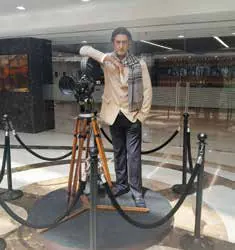
Bollywood dialogues are used on all occasions; for wooing sweethearts, at boardroom discussions, and more. The young secretly aspire to become the larger-than-life characters for which it is renowned, while its music triggers myriad emotions, from nostalgia and romance to elation and energy. Now, in Mumbai, where movie releases can feel like civic events, the National Museum of Indian Cinema offers something rare: a chance to pause, rewind, and see how cinema grew to become the passion it is today. Set within the serene Films Division complex on Pedder Road, the museum is not merely an account of films made but also a chronicle of dreams imagined, technologies mastered, and stories that shaped generations.
Spread across two buildings–Gulshan Mahal, a restored heritage bungalow, and a sleek contemporary structure–the museum unfolds like a carefully edited screenplay, moving from origins to evolution, from artefacts to immersion.
Dawn of Indian Cinema
The experience begins at Gulshan Mahal, whose colonial-era architecture instantly evokes the mood of times gone by. This space is devoted largely to the early history of Indian cinema.
A central gallery is dedicated to Dadasaheb Phalke, regarded as the Father of Indian Cinema. Rare photographs, personal correspondence, and production stills from Raja Harishchandra (1913) takes back visitors to the very birth of Indian filmmaking, while original hand-cranked cameras, the first projectors, and decades-old lighting equipment reveal the physical and technical challenges faced by filmmakers in the early 20th century.
Another gallery focuses on the era of silent films, displaying vintage posters, lobby cards, film reels, and publicity material from the 1910s and 1920s. Painted posters, many of them handcrafted, stand out as rare artefacts of visual culture. And the transition from silent cinema to sound is marked by exhibits on Alam Ara (1931), India’s first talkie. Early microphones and sound-recording devices, and documentation related to sound synchronisation, highlight how profoundly this innovation transformed storytelling.
Craft of Cinema Tech & Collab
The modern building expands the narrative to the craft of filmmaking. Galleries focusing on cinematography reveal equipment ranging from early Mitchell models to the Arriflex motion-picture cameras, next to lenses and lighting instruments. Alongside, detailed explanations trace the evolution of visual grammar in Indian films.
The editing and sound-design section showcases editing tables, magnetic tape recorders, and mixing consoles, with interactive displays demonstrating how sound, music—and silence—shape emotion, narrative, and rhythm. Meanwhile, the costume and production-design gallery presents sketches, fabric samples, miniature sets, and iconic costume details, offering insight into the world that defines Indian cinema’s visual depth.
Songs, Stars & Stardom
Soundtracks are intrinsically linked to Indian cinema and a dedicated gallery on music celebrates composers, lyricists, and playback singers. Handwritten musical notations, gramophone records, and listening stations chart the evolution of film music across eras—a joy for anyone with an evergreen tune on their lips.
Then there’s the ‘star system’ gallery, which explores the rise of film celebrities through fan mail, magazine covers, interviews, and promotional material, observing how actors became symbols of aspiration and identity.
Cinema and the Nation
One of the museum’s most reflective sections examines cinema’s relationship with history and society. Here, films responding to topics such as colonial rule, independence, social reform, and political change are contextualised with timelines and commentary. Also featured is regional cinema, which receives special attention via exhibits representing major film traditions across India, reinforcing the diversity of voices that define Indian cinema.
A Living Archive
A section of the museum showcases screening rooms showing restored classics and documentaries, ensuring the museum remains a living monument to the medium rather than just a static archive Additionally, rotating exhibitions add freshness to repeat visits.
Ultimately, the National Museum of Indian Cinema is a celebration of collective memory, reminding visitors that movies are more than just entertainment; they make up a powerful cultural force, one that continues to shape emotions, identities, and dreams. As you step back into Mumbai’s bustle, you carry a renewed appreciation for the magic of the moving image, and for the stories that have illuminated screens and lives for over a century
HIGHLIGHTS
- There are special sub-sections within the galleries, paying tribute to Raj Kapoor, Mrinal Sen, Mehboob Khan, Satyajit Ray, Ritwik Ghatak and Bimal Roy.
- A statue of Raj Kapoor in his Chaplinesque form is now a popular selfie spot.
- Documentaries are screened every Friday and run through till the next week. Restored classics are screened every Saturday.
- The technology section includes replicas of the Mutoscope, the camera used by the Lumiere Brothers, and the Praxinoscope - a spinning cylindrical animation device invented in France in the 1870s.
@spicejetairlines FlySpiceJet
Photo by Venki Upputuri (Mumbai - Bengaluru) Devang Mehta (Goa - Mumbai) Dr. Tushar Palve (Mumbai - Chennai) Photo by Neha Jain (Jaipur - Mumbai) SK Imran (Kolkata - Ahmedabad) Be in the Spotlight!
Share your best travel moments and shine in SpiceRoute magazine and on our social media pages. Tag us and email your photos with flight details to marketing.ho@spicejet.com!
LET THE BEGINNING BE SPECIAL.
BOOK A PRIVATE CHARTER FOR YOUR DESTINATION WEDDING AND KEEP THOSE JOYFUL MOMENTS EXCLUSIVE, ENSURING PRIVACY AND COMFORT.
Q400 BEST SUITED FOR SMALL GROUP TRAVEL
BOEING 737 BEST SUITED FOR GROUP TRAVEL OF UP TO 200 PASSENGERS
CHARTER FOR EVERYONE
For bookings: