Take Off
Global Flavours on Indian Plate
A dish may be born in Seoul, a beverage perfected in Kyoto, a technique developed in Copenhagen, or an ingredient celebrated in Lima. But today, all have found a new life thousands of kilometres away, in India.
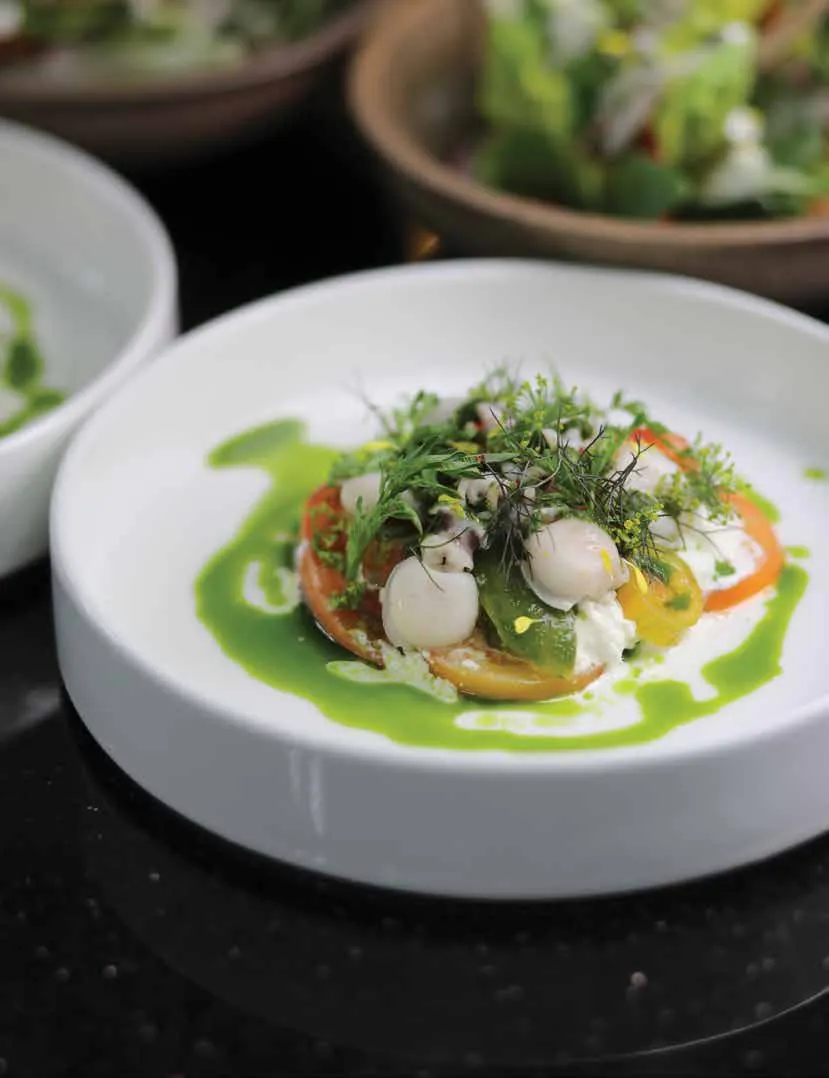
What is especially exciting about the Indian food landscape is that global culinary trends are no longer being received merely as imports; they are being localised and reinterpreted. Today, Indian diners are curious, adventurous, and increasingly willing to experiment. At the same time, they expect the food to hold familiarity, comfort, and relevance. The well-travelled Indian is now more knowledgeable about international cuisines, having gone beyond Thai and Mediterranean.
THE INSPIRING EAST
Korean food is perhaps the strongest proof of our expanding interest in the world of gastronomy. Driven initially by K-Pop, K-Dramas, and social media, Korean fare has moved rapidly from niche restaurants into mainstream Indian food culture. Gochujang, kimchi, Korean fried chicken, tteokbokki, kimbap, and ramyeon have become familiar names, while recent industry reports indicate that Korean noodles recorded robust growth in India – even self-service ramyun bars are popping up. And much to my surprise, that gochujang goes really well with kasundi!
Ramen, in particular, is now a cultural phenomenon. What was once considered an inexpensive bowl of noodles is turning up in sophisticated restaurants, cafés, and hotel menus. The Indian version can be fascinating: a ramen broth enriched with miso and Indian spices, tandoori chicken replacing traditional chashu, or a vegetarian bowl built around roasted mushrooms, sesame, and chilli oil. Even the humble instant noodle is today a showcase for creativity.
And this is where India has an advantage. We are a land of broths, gravies, spices, pickles, and slow cooking. By looking at ramen, a chef can discover similarities with our own culinary practices, rather than treating it as something completely foreign. The same cultural acceptance can be seen with matcha. Once largely confined to Japanese tea ceremonies and specialist cafés, matcha has turned into a global lifestyle ingredient. In India, it has been embraced by cafés, and mixed with desserts and beverages: matcha tiramisu, matcha malpua, and even matcha shikanji have found their way onto menus. Matcha is more interesting when it enters into a conversation with flavours that Indians already understand – just imagine matcha kulfi, matcha cardamom cheesecake, or a matcha thandai. My recent experiment, Matcha Lassi Dalgona, hit the right notes!
Another ingredient quietly making its way into contemporary kitchens is black garlic. Its sweet, balsamic-like character, soft texture, and intense umami make it exceptionally versatile. It can be added to sauces, vinaigrettes, purées, marinades, and breads too. For an Indian chef, black garlic can work beautifully with tamarind, kokum, roasted aubergine, mushrooms – even a rich dal. A black-garlic naan with smoked butter, let’s say, could be an enticing link between global technique and Indian comfort.
CUISINE THAT TRAVELS WELL
Then there is the growing curiosity around Peruvian cuisine, with dishes such as ceviche playing the role of international ambassador for the South American country. Indeed, Peru has become one of the world’s most exciting gastronomic destinations, celebrated for its extraordinary biodiversity and combination of indigenous Asian, European, and African influences. India has a natural affinity with this cuisine since both traditions understand acidity, chillis, herbs, and strong seasoning.
A Peruvian-inspired Indian dish should, therefore, feel natural – a pomfret ceviche with kokum ‘leche de tigre’, for example, or a tuna tiradito with green chilli, coriander, and citrus. It doesn’t have to be a literal fusion. The idea is to understand the technique and flavour profile before translating it through Indian ingredients. At the Novu restaurant in Alibaug, for instance, we are serving ceviche infused with local fruit.
Nordic cuisine offers another beguiling lesson. Its emphasis on seasonality, fermentation, preservation, minimalism, local produce, and sustainability is highly pertinent to India. At first glance, Nordic food may appear distant from Indian fare, but look closer and the philosophies overlap. A modern Indian chef can take inspiration from the Scandinavian way rather than simply copy their culinary creations. A beautifully plated dish of fermented bamboo shoot, smoked pumpkin, local millet, and seasonal greens can be every bit as contemporary as a Nordic tasting-menu course.
Universal trends succeed best when they satisfy an existing local need. It makes for an exciting opportunity for Indian chefs, who, instead of inquiring, “How do I reproduce what is popular abroad?” should ask, “What can I learn from it, and what can I create with it?”
SWAPPING FOOD TALES
Korean fermentation can enthuse Indian fermentation. Nordic preservation can allow us to rediscover our own centuries-old but forgotten methods, of preservation, pickling, fermentation, and sun-drying, as well as our preparation of papad, achaar, and kanji. Meanwhile, the tartness common in Peruvian cooking can encourage new expressions in Indian seafood.
The future of international cuisine in India, therefore, may be less about authenticity vs. fusion, and more about interpretation. For, India has always made its own the influences it absorbed from outside – from Persia and Central Asia to Portugal, from Britain to Southeast Asia and beyond. Today’s global food trends are simply another chapter in that ongoing culinary conversation. And the most exciting dish of tomorrow may not be Korean, Nordic, Japanese, Peruvian, or Indian. It may be unmistakably universal and unquestionably Indian at the same time
SPICEJET FLY
BETTER WITH SPICEMAX
MAX COMFORT AT MIN PRICE
Now get the best seat in the sky with SpiceMax and enjoy extra comfort and more privileges. Apart from a more comfortable and spacious seating option with significantly extra legroom, you will be offered a delicious meal with a beverage. Avail of priority services and a lot more to make your travel extra special! All this is for a modest add-on fee starting from INR 950 for domestic flights and INR 1,950 on international routes. Please note that prices may vary as per flight. As they say, it’s not the destination but the journey that matters. So book your SpiceMax seat and upgrade your flying experience.
SPICEPLUS
EXTRA BENEFITS AT NO EXTRA COST
EXTRA SEAT
OWN YOUR SPACE IN THE SKY
Travelling with safety, comfort and convenience is a choice. With SpicePlus, you can save time with Priority Services like shorter and quicker queues at check-in, quicker and smoother boarding and lesser waiting time with preferred baggage delivery. You also get to enjoy the convenience of your choice of preferred seat and a meal with a beverage. Add SpicePlus to your booking and get all these benefits for a starting price of just INR 500.
With us you can create your own private space by booking an Extra Seat or a Private Row to enjoy a contactless and stress-free flying experience. You also get to enjoy a host of time-saving services like priority check-in, priority boarding and priority baggage delivery. And since you have extra space, you also get to carry more with up to 10 kg baggage allowance worth INR 6,450 free. So, sit back, relax and enjoy a contactless, stress-free flying experience.
From offering maximum privileges at minimum price to special fares for special people, SPICEJET brings you a slew of benefits to make your travel more convenient and memorable.



SPICELOCK FLYEARLY
YOU1st
Here’s an offering from us that can make flying cost-effective and smart. SpiceLock lets you hold your ticket at the same price for 48 hours, as you take time to make your decision. This way, you are protected from surging prices and selling out of tickets. You can lock in the fare, with or without passenger names, only if your travel is confirmed. Available on both domestic and international routes. It is applicable only on bookings made through www.spicejet.com and mobile app.
Looking to prepone your flight? FlyEarly is a unique service that allows you to reschedule your travel to an earlier time on the same day. You can choose it at the airport ticket counter, just before takeoff.
SPICEFLEX FARE
We want to transfer your worries to us and fly stress-free. Book with SpiceFlex Fare and enjoy the flexibility of changing your travel plan without worrying about the change fees. Along with this you also get some amazing and never-seen-before benefits like unlimited free date changes, sandwich, and also a preferred seat. This fare can be booked from SpiceJet website, mobile app, reservation centre, airport and through travel agents. Select this fare on the Flight Selection page and avail the associated benefits.
We love pampering you with choices. Choose from a wide variety of hot meals and delicious snacks on SpiceJet flights. There are more than 80 sumptuous delicacies to pick from, including beverages, munchies, and ready-to-eat items. Delightful sandwiches and hot spreads for breakfast, lunch, dinner and snack times are available on pre-booking. So, take your pick when you book your SpiceJet ticket. We offer a selection of alcoholic beverages—miniatures and beer—available for onboard purchase and consumption on select international flights. There are also specially curated meals for kids. Apart from the main meal of the day or sandwich, you can also pre-book chef’s choices and special meals such as Jain meal, meals for diabetics, gluten-free meals, fruit platters, low-calorie salads, etc. Didn’t we say you would be spoilt for choice?
For all of us at SpiceJet, you always come first! With this special offer, you can skip queues and avail of premium services like priority check-in, priority boarding and priority baggage delivery at a nominal price of just INR 595/- for domestic routes and INR 699/- for international flights.