Number Game
A Jab Tale
Marking National Vaccination Day, observed on March 16 every year in India, we highlight some milestones achieved by the country under one of the biggest immunisation programmes
National Vaccination Day or National Immunisation Day was launched in India in 1995 when the government initiated the Pulse Polio Immunisation Programme
India committed to the resolution for global polio eradication, passed by the World Health Assembly, in 1988
The country reported the last case of polio in 2011
On March 27, 2014, the South-east Asia region of WHO, including India, was certified polio free by the Regional Certification Commission
The Government of India started Mission Indradhanush in 2014 to accelerate full immunisation coverage to around 90 per cent and reduce mortality among children
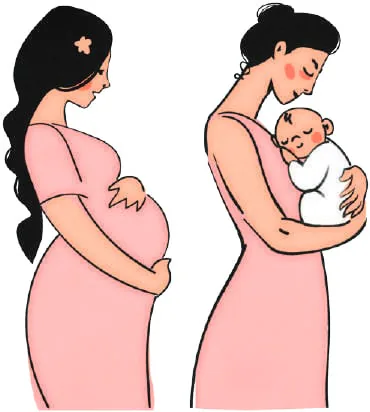
India's universal immunisation programme is one of the largest in the world with annual cohorts of about 26.5 million infants and 29 million pregnant women as per the latest government data
Following the success of Mission Indradhanush, PM Narendra Modi launched the “Intensified Mission Indradhanush (IMI)" in 2017 to further reinforce the immunisation programme across 121 districts, 17 urban areas and 52 districts of the Northeastern states
The immunisation programme has been expanded to cover diseases including pertussis, meningitis and pneumonia (hemophilus influenza type B infections), and Japanese encephalitis (JE) in JE endemic districts with vaccines such as rotavirus vaccine, IPV, adult JE vaccine, pneumococcal conjugate vaccine (PCV) and measles-rubella (MR)
Till February 2023, 4.45 crore children and 1.2 crore pregnant women had been vaccinated, as per the latest government data
According to WHO, immunisation is a key component of primary health care and an “indisputable human right”. Vaccines work with the body's natural defences to reduce the risk of contracting a disease
In the recent interim budget for 2024-25, Finance Minister Nirmala Sitharaman said that the government is considering rolling out a human papillomavirus (HPV) vaccination campaign for girls between the ages nine and 14, to tackle the incidence of cervical cancer