HomeboundAyodhya
Where History Meets Faith
From being Lord Rama’s legendary capital to a flourishing ground for Jain and Buddhist traditions, Ayodhya and its neighbouring regions serve as important reminders of our shared and multicultural pasts
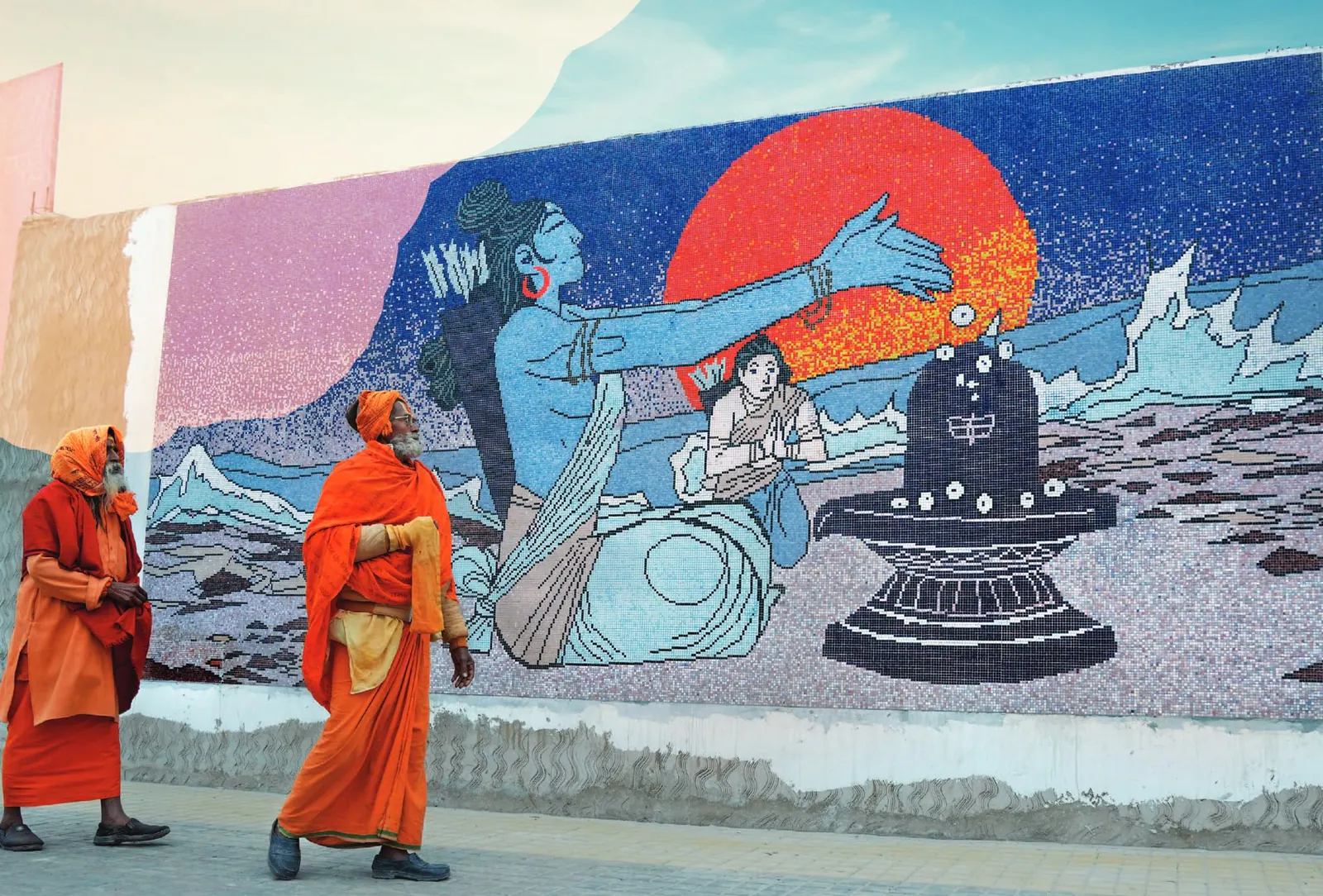
Once the capital of the ancient kingdom of Kosala, Ayodhya is located on the east bank of the Ghaghara (more popularly known as the Saryu) River. It is the birthplace of Lord Rama, the legendary hero of the Hindu epic Ramayana, and one of modern India’s most important pilgrimage sites. But with its rolling landscapes and myriad architectural remains, Ayodhya and its immediate surrounds have also borne witness to the lasting legacies of Jain and Buddhist traditions. This itinerary is for an immersive cultural trail across one of the oldest settlements in north India.
LORD RAMA'S LAND
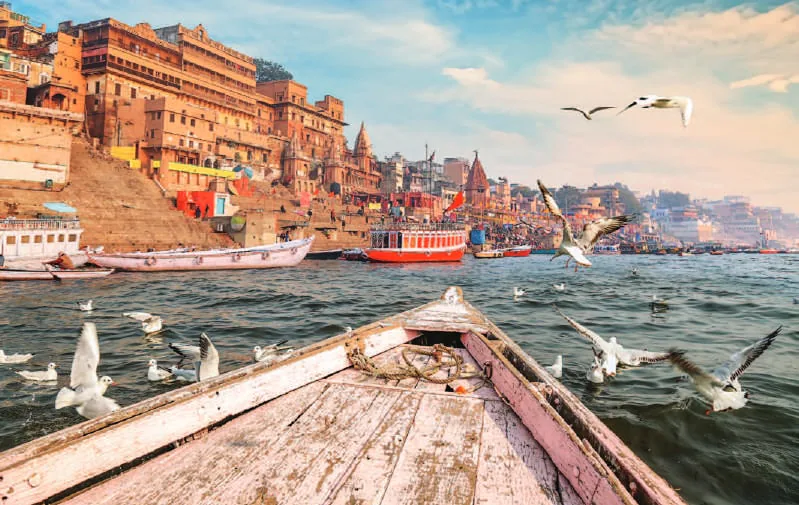
The town is dotted with several temples in close proximity, celebrating various events from the Ramayana. The Dashrath Mahal and the Kanak Bhawan near the Ram Janmabhoomi Temple are believed to have been the residences of King Dashrath and Devi Sita respectively. Hanuman Garhi, dedicated to Lord Hanuman, is also nearby and was completed with generous donations during the reign of the Nawabs of Awadh. By far the most interesting structure is the Raj Dwar temple, whose current facade dates back almost 900 years, and it was a major entry gate into Ayodhya in the ancient times. Constructed on one of the highest points of the city, it includes a tower built in Nagara style. At a short distance is the Guptar Ghat where Lord Rama is believed to have taken jal samadhi to mark the end of his earthly life. Enjoy a boat ride here to experience a serene sunset in the backdrop of old temples and palaces.
JAIN HERITAGE
Several ancient Gupta period texts from the 5th century indicate that the ancient name for Ayodhya was Saket, which is significant to the history of Jainism. Five out of 24 Jain Tirthankaras were born at Saket, including the first Tirthankara Adinath, making it one of the most important cities for Jains. A massive 31-ft statue of Lord Adinath, who is also known as Lord Rishabhdev, has been installed at the Digambar Temple at Raiganj. Other temples commemorating the lives of Tirthankaras Ajitnath, Abhinandannath, Sumatinath and Ananthnath are located in Ramkot, Saptsagar, and the Sarai locality, among other areas within the district of Ayodhya.
SHRAVASTI AND KUSHINAGAR
About three hours from Ayodhya lies the ruins of Shravasti, where Lord Buddha preached. The Angulimala Stupa ruins or Pakki Kuti is among the largest Buddhist mounds in the Mahet area. It finds mention in the records of Xuanzang, the Chinese explorer who travelled extensively through India in the 7th century. Lord Buddha himself is believed to have stayed at the Jetavana Vihara, which has been converted into a historical park. Stroll around the remnants of halls and stupas, and the Ananda Bodhi pipal tree under which Lord Buddha is said to have delivered sermons. If you have an extra day at your disposal, visit Kushinagar (around 200 km away) where Lord Buddha attained Parinirvana (salvation). The mound at Ramabhar Stupa marks the site of his cremation while the Mahanirvana Stupa was built on his relics.
NATHA YOGIS
Between Kushinagar and Ayodhya lies Gorakhpur, with a temple complex dedicated to Gorakhnath, a prominent early medieval mystic of the Natha order. The Natha yogis were influenced by Shaivism and are strong proponents of yoga, particularly Hatha yoga. The Gorakhnath Mandir, a shrine built in the honour of the saint, is not only a cultural hub, but also serves as a poignant reminder of the region’s diverse, interlinked histories.
The new Ram Janmabhoomi temple features a stunning 51-inch idol sculpted in black stone by artist Arun Yogiraj
What's More
CELEBRATIONS
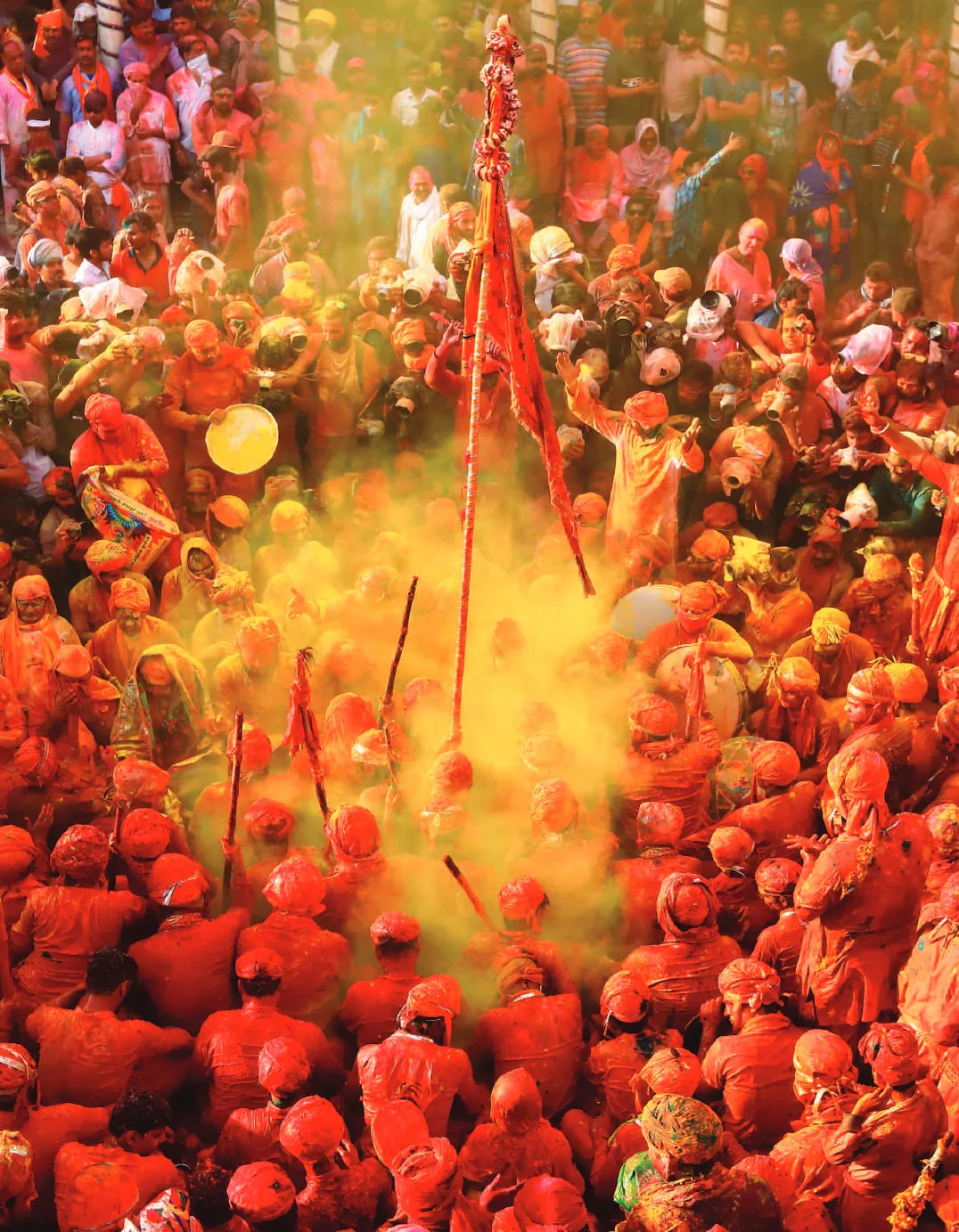
The festivals celebrated in Ayodhya offer deep cultural experiences. Some of the most vibrant festivals and events include Ram Navami mela, Shravan jhula mela and Deepotsav. The city also traditionally hosts stunning productions of the Ram Lila or the re-enactment of the life of Lord Rama.
FOODIES DELIGHT
Enjoy the scrumptious kachoris and mouthwatering chaats, from pani puri to aloo tikki, which are local delicacies. Also, try sweet laddoos.
ACTIVITIES
Try rafting on the Saryu River, which offers a mix of rapids, for a thrilling experience. Take a stroll on the numerous beautiful ghats, from Swargdwar ghat to Naya ghat.
OLD LORE
Visit Tulsi Smarak Bhawan to learn more about saint Tulsidas, the author of Ramcharitmanas. Roam the old alleys and visit other attractions such as the Raj Sadan gates and Gulab Bari.
Ayodhya is a place of high religious significance even among the Jains, with many important shrines located in the region
Best Time to Visit: Spring is a good time to explore Ayodhya and its neighbouring regions.
Ayodhya is about 140 km from Lucknow.
H I G H L I G H T S
MUST-SEE
Visit Ram ki Paidi, a series of ghats on the Saryu River frequented by devotees
USP
Dotted with shrines, Ayodhya is one of the most sought-after centres among pilgrims and archeologists
WHAT TO DO
Shop for bangles, copper vessels, holographic posters and marble statues of gods and goddesses
HISTORY TIP
The ancient city attained grandeur under many eminent kings such as Ikshvaku and Prithu over the centuries
Aishani Gupta writes on cities, art and architecture of India. She is an entrepreneur and a heritage consultant.
SPICE2050 USE THIS COUPON
CASHBACK
FOR FIRST-TIME USERS OF
PATHOLOGY TESTS

LOCK IT NOW FOR 48 HOURS* AND BOOK LATER WITH
STARTING AT JUST
AVAILABLE ON DOMESTIC AND INTERNATIONAL FLIGHTS.
FOUND THE RIGHT FARE?
*T&C apply.
*Available on flights where travel date is 7 days & beyond for domestic flights and 15 days & beyond for international flights.
Opt for SpiceLock and enjoy worry-free travel. You can lock your fare at a nominal fee by booking directly only on www.spicejet.com. Hurry, so that you can relax while deciding on travel dates.
LOCK WITHOUT PASSENGER NAME NO FARE SURGE 48 HOURS OF HOLD TIME