Take Off
Imphal: Your Ultimate Guide
Among the cities of the Northeast states, Imphal is picture-perfect. With its rolling hills, and a rich culture and history, the capital of Manipur assures its guests of a warm welcome and tales to remember.
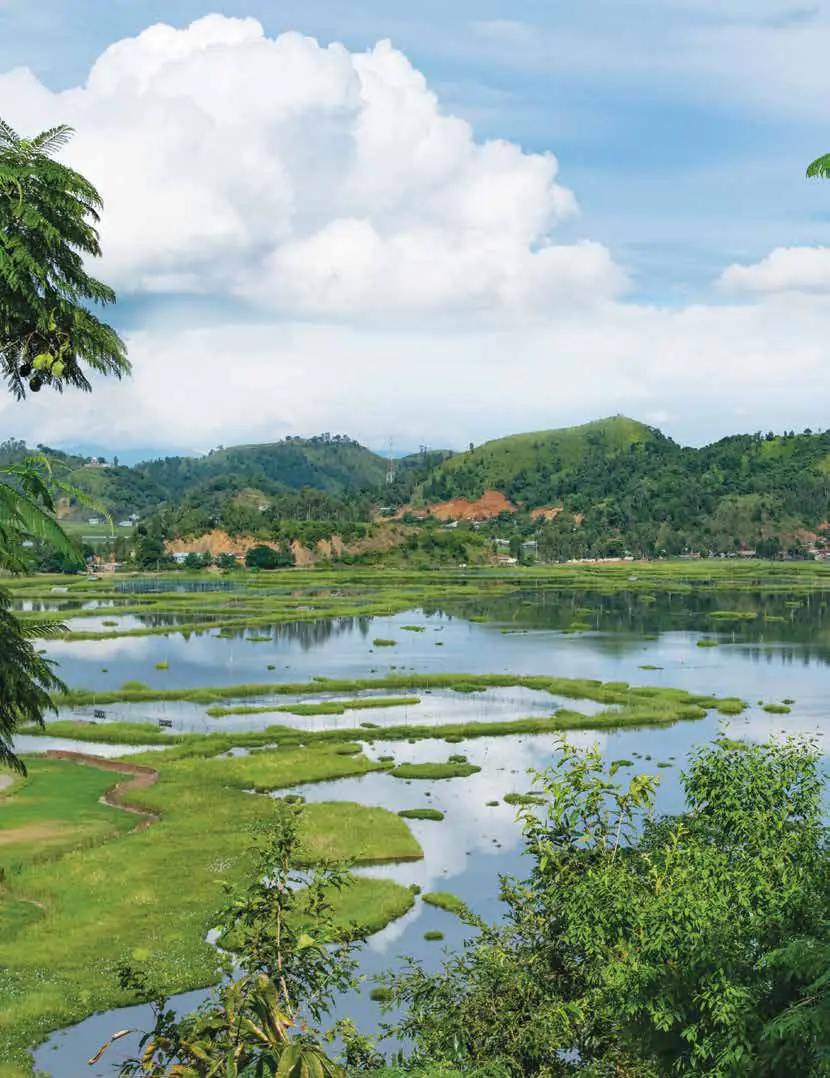
Cradled among hills, Imphal is a sight to behold as one prepares to land at the Bir Tikendrajit International Airport. Loktak, a lake unlike any other (and dotted with islands), looks like a magical web from atop. The drive from the airport to the city centre sets the tone for a holiday that promises to be extraordinary in more ways than one. The people are soft-spoken, the roads clean and wide, the air crisp and fresh—and there is something mystical about Imphal, perched at approx. 2,500 feet.
Revisiting History
The iconic Kangla Fort in the heart of Imphal is a proud reminder of the state’s storied history. Once the citadel of Manipur’s Meitei kings, the fort and the museum inside present a walk down memory lane. It holds within its premises ancient temples, remnants of its once imposing brick walls, palace halls—and the regal statues of Kangla Sha, two sacred leogryphs standing majestically tall at 18 feet. This historic structure has been witness to the rise and fall of successive Meitei kingdoms, followed by the British invasion. While its grandeur recalls Manipur’s resilience and valour, the fort is also strewn with religious sites. Notable among them is the resplendently white Pakhangba Laisang temple, the epitome of reverence, and the shrine of Shree Govindajee. Today, Kangla Fort is a must-visit ecological retreat with lush-green spaces, pristine water bodies, gardens of medicinal plants, and much more.
Loktak Lake The Lifeline
Among the most immersive experiences Imphal has to offer is a boat ride on the tranquil Loktak, the largest freshwater lake in the Northeast. As you make your way through the serene waters, covered by a multitude of small islands known as phumdis, fishermen cross your path in local boats. The lake is an integral part of Manipur’s ecosystem, supporting native vegetation and fisheries, besides helping generate hydropower and boosting tourism.
To complete your experience, do stop by for a cuppa at one of the phumdis—there is also the added attraction of Sendra Island, a scenic hillock on Loktak that boasts a captivating view of the bustling lake below. Another can’t-miss is the Takmu Water Sports Complex, where you will spot tourists and locals engaging in water-skiing, motor-boating, and wind-surfing, among other adventure sports.
The Park that Floats
Another of Manipur’s many unique sites is Keibul Lamjao, the only floating national park in the world. This wetland ecosystem, a part of Loktak Lake, guarantees a breathtaking encounter with fauna—you can sight wild boar, hog deer, otters, and a host of waterfowl and migratory birds. More significantly, it is home to the endangered Sangai, the state animal, also known as the brow-antlered deer or Eld’s deer. Complete with watchtowers and resthouses, a day spent amid the still and silent waters of Keibul Lamjao is nothing less than an expedition.
Where Women Reign
In Imphal and almost everywhere in Manipur, it is mostly the women who are seen managing the shops and local businesses. In fact, this is probably the only city in India where there is a special market dedicated to, and run exclusively by, women. The origins of Ima Keithel, meaning ‘Mothers’ Market’, go as far back as the 16th century. Hundreds of women in traditional and colourful attire can be seen selling a range of items, including handicrafts, cane items, vibrant handwoven textiles, wonderfully curated jewellery pieces, and local produce, besides a plethora of other Manipuri creations. And since many of them understand English, shopping here can be really exciting. Ima Keithel is a symbol of women’s empowerment, and definitely an example for the rest of us to follow.
A visit to Manipur is incomplete without tasting the state cuisine. Rice is a staple here, often served with vegetable stew or non-vegetarian dishes. The food is healthy with most of the preparations steamed with very little spices—and plenty of greens. Among the popular culinary delights are Chamthong, a vegetable stew, and Eromba, a mix of vegetables, fish, and mashed chillis, all boiled together to give a very distinct flavour. And the perfect dish to end your Manipur sojourn? Chak-hao Kheer, a pudding made from black rice
Festive galore
- Sangai Festival: Named after the Sangai deer, this annual tourism festival is held in November. Folk dance performances and indigenous sport competitions are held besides showcasing Manipur’s rich culture, cuisine and textile legacy.
- Yaoshang Festival: Celebrated on the full moon day of the month of Lamta (February-March), the festival is celebrated with singing and dancing. The ‘yaoshang’ (a small straw hut) is constructed and then burnt on the first day of the festival.
- Heikru Hitongba: A traditional boat race festival that has been passed down since 948 AD is held in the month of September every year. Originally held to foster a feeling of peace and unity, today the boat race held at the moat of Sangolband is a big draw for tourists and locals alike.
- Best Time To Visit: October to March is the best time to visit Manipur. The time is ideal for outdoor activities, also this is when most festivals take place.
SPICEJET ADD-ONS